

Small businesses face a unique challenge: they must operate with limited resources while navigating risks that can disrupt operations, damage reputation, and impact long-term growth.
Operational risks for small businesses are often underestimated—until something goes wrong. Whether it’s a cyberattack, employee error, supply chain disruption, or outdated processes, these risks can quietly erode productivity and profitability.
The good news? Most operational risks are manageable—with the right awareness, planning, and support.
.
The Top Operational Risks for Small Businesses
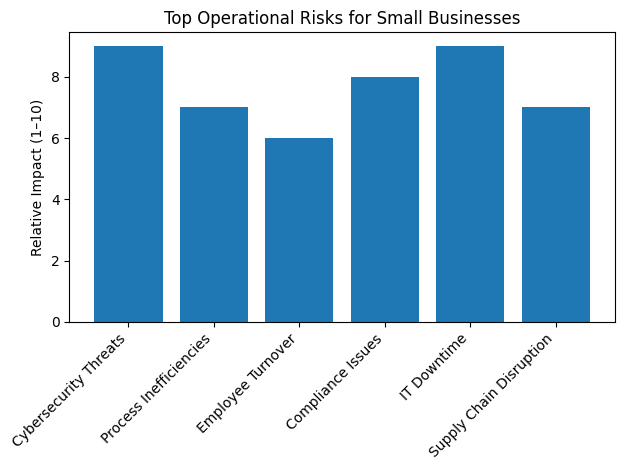
Operational risks are any internal or external events that can disrupt your day-to-day business operations. Unlike financial or market risks, these stem from how your business actually runs. And these business risks are often missed by even experienced SMB leaders.
Common categories include:
- Technology failures (system downtime, cyber incidents)
- Human error (mistakes, lack of training)
- Process inefficiencies (manual workflows, poor documentation)
- Supply chain disruptions
- Compliance and regulatory issues
According to the SBA, small businesses are especially vulnerable due to limited redundancy and fewer resources to recover quickly.
.
.
The Most Common Operational Risks (and What to Do About Them)
1. Cybersecurity Threats and Data Loss
Cyberattacks are no longer just a “big business” problem. Small businesses are frequent targets because they often lack strong defenses.
Impact on your business:
- Downtime and lost revenue
- Damaged customer trust
- Potential legal and compliance issues
Action steps:
- Implement multi-factor authentication (MFA)
- Regularly back up critical data
- Conduct employee security awareness training
- Work with an MSP for proactive monitoring and threat detection
The Cybersecurity and Infrastructure Security Agency (CISA) also offers excellent small business resources. Many small and midsized businesses are also turning to managed cybersecurity services to secure their operations against cyber threats and bad actors.
2. Inefficient or Manual Processes
Many small businesses rely on manual workflows or “tribal knowledge” that lives in employees’ heads.
Impact on your business:
- Slower operations and bottlenecks
- Increased employee frustration and burnout
- Higher risk of errors
Action steps:
- Document key processes
- Automate repetitive tasks where possible
- Use integrated systems instead of disconnected tools
Human impact: Your team spends less time fighting systems and more time doing meaningful work.
3. Employee Turnover and Knowledge Gaps
When a key employee leaves, critical knowledge can walk out the door with them.
Impact on your business:
- Disrupted workflows
- Loss of productivity
- Increased onboarding time
Action steps:
- Create standardized procedures (SOPs)
- Cross-train employees
- Use centralized systems for documentation and access
4. Compliance and Regulatory Risks
Industries like healthcare, finance, and nonprofits face increasing regulatory pressure.
Impact on your business:
- Fines and penalties
- Legal exposure
- Reputational damage
Action steps:
- Stay updated on relevant regulations
- Conduct periodic compliance audits
- Ensure systems and data handling meet required standards
Resources from NIST can help guide compliance and risk frameworks.
5. IT Downtime and System Failures
Even a short outage can disrupt operations significantly.
Impact on your business:
- Lost productivity
- Missed customer opportunities
- Frustrated employees and clients
Action steps:
- Invest in reliable infrastructure
- Monitor systems proactively
- Establish a business continuity and disaster recovery plan
Where MSPs help: Managed IT services reduce downtime through proactive maintenance, monitoring, and rapid response—keeping your team productive and your business running.
6. Vendor and Supply Chain Disruptions
Small businesses often rely heavily on a few vendors.
Impact on your business:
- Delayed projects or deliveries
- Increased costs
- Operational bottlenecks
Action steps:
- Diversify suppliers where possible
- Build contingency plans
- Maintain strong vendor relationships
.
Why Operational Risk Management Matters More Than Ever
Operational risks don’t just affect systems—they affect people.
- Employees lose time and energy dealing with preventable issues
- Customers experience delays or poor service
- Leadership spends time reacting instead of growing the business
The result? Slower growth, higher stress, and missed opportunities.
When you reduce operational risk, you:
- Improve employee experience and retention
- Increase efficiency and productivity
- Build a more resilient, scalable business
.
Customer Story: How One Small Business Reduced Operational Risk and Reclaimed Productivity
Industry: Professional Services
Company Size: 25 Employees
Challenge: Frequent disruptions, inconsistent processes, and growing cybersecurity concerns
The Situation
Like many small businesses, this firm had grown quickly—but their operations hadn’t kept up.
- Employees relied on manual processes and undocumented workflows
- Critical knowledge lived with just a few team members
- Their IT environment was reactive, not proactive
- Cybersecurity protections were minimal
At first, these issues seemed manageable. But over time, the cracks started to show.
The Problem
Operational risks began to impact both employees and the business:
- A minor system outage brought work to a halt for nearly a full day
- Employees spent hours troubleshooting recurring tech issues
- Onboarding new hires became slow and inconsistent
- Leadership worried about data security and compliance exposure
Human impact:
Frustration grew across the team. Employees felt like they were constantly working around problems instead of doing meaningful work.
Business impact:
Lost productivity, delayed client deliverables, and increasing risk exposure.
The Turning Point
After a particularly disruptive downtime incident, leadership realized the issue wasn’t just IT—it was operational risk across the business.
They needed a more structured, proactive approach.
The Solution
The company partnered with a Managed Service Provider (MSP) for strategic IT and cybersecurity support to assess and address their operational risks.
Together, they implemented:
1. Proactive IT Management
- 24/7 system monitoring
- Regular maintenance and updates
- Reduced unplanned downtime
2. Cybersecurity Enhancements
- Multi-factor authentication (MFA)
- Endpoint protection and threat detection
- Employee security awareness training
3. Process Standardization
- Documentation of key workflows
- Centralized systems for file access and collaboration
- Reduced reliance on “tribal knowledge”
4. Business Continuity Planning
- Data backup and disaster recovery solutions
- Clear response plans for potential disruptions
The Results
Within months, the business saw measurable improvements:
- Significant reduction in downtime
- Faster onboarding and training for new employees
- Improved employee satisfaction and less frustration
- Stronger security posture and reduced risk exposure
Human impact:
Employees could focus on their actual roles instead of constantly troubleshooting issues.
Business impact:
More consistent operations, improved client experience, and greater confidence in scaling the business.
Key Takeaway
Operational risks often show up as “small issues”—slow systems, unclear processes, recurring disruptions.
But over time, they compound.
By taking a proactive approach—and leveraging the right technology partner—small businesses can:
- Reduce friction and burnout
- Improve efficiency and productivity
- Build a more resilient, scalable operation
.
FAQ: Operational Risks for Small Businesses
What is the biggest operational risk for small businesses?
Cybersecurity threats and IT downtime are among the most significant risks because they can halt operations quickly and have widespread impact.
How can small businesses identify operational risks?
Start with a simple risk assessment:
- Map your key processes
- Identify where failures could occur
- Evaluate likelihood and impact
Do I need a formal risk management plan?
Yes—but it doesn’t have to be complex. Even a basic documented plan with priorities and mitigation steps can significantly reduce risk.
How often should operational risks be reviewed?
At least annually—or whenever there are major changes in your business, technology, or staffing.
Can managed IT services help reduce operational risk?
Absolutely. MSPs help minimize risk through:
- Proactive monitoring
- Cybersecurity protection
- System optimization
- Strategic IT planning
.
Key Takeaways
Operational risks for small businesses are unavoidable—but they are manageable.
Focus on:
- Strengthening cybersecurity
- Streamlining processes
- Documenting knowledge
- Planning for disruptions
- Leveraging the right technology and partners
The goal isn’t perfection—it’s resilience.
.
Final Thoughts for SMB Leaders
Operational risk isn’t just about avoiding problems—it’s about creating a business that runs smoothly, supports your team, and scales confidently.
When your systems, processes, and people are aligned, your business becomes more than functional—it becomes competitive.
If you’re unsure where your biggest operational risks lie, now is the time to find out.
At OLS Technology, we help small businesses:
- Identify operational and IT risks
- Strengthen cybersecurity defenses
- Improve system reliability and performance
- Build scalable, resilient IT strategies
Let’s start with a risk assessment. Connect with the OLS team today to uncover gaps and create a plan that keeps your business running smoothly.
.
IT That’s More Than Tech. It’s Fuel for Growth.
OLS Technology helps Pacific Northwest SMBs grow with managed IT and cybersecurity built for the real world. We focus on what matters most to your teams and your bottom line: predictable pricing, reliable tech and uptime, smarter workflows, and secure data and communication.