
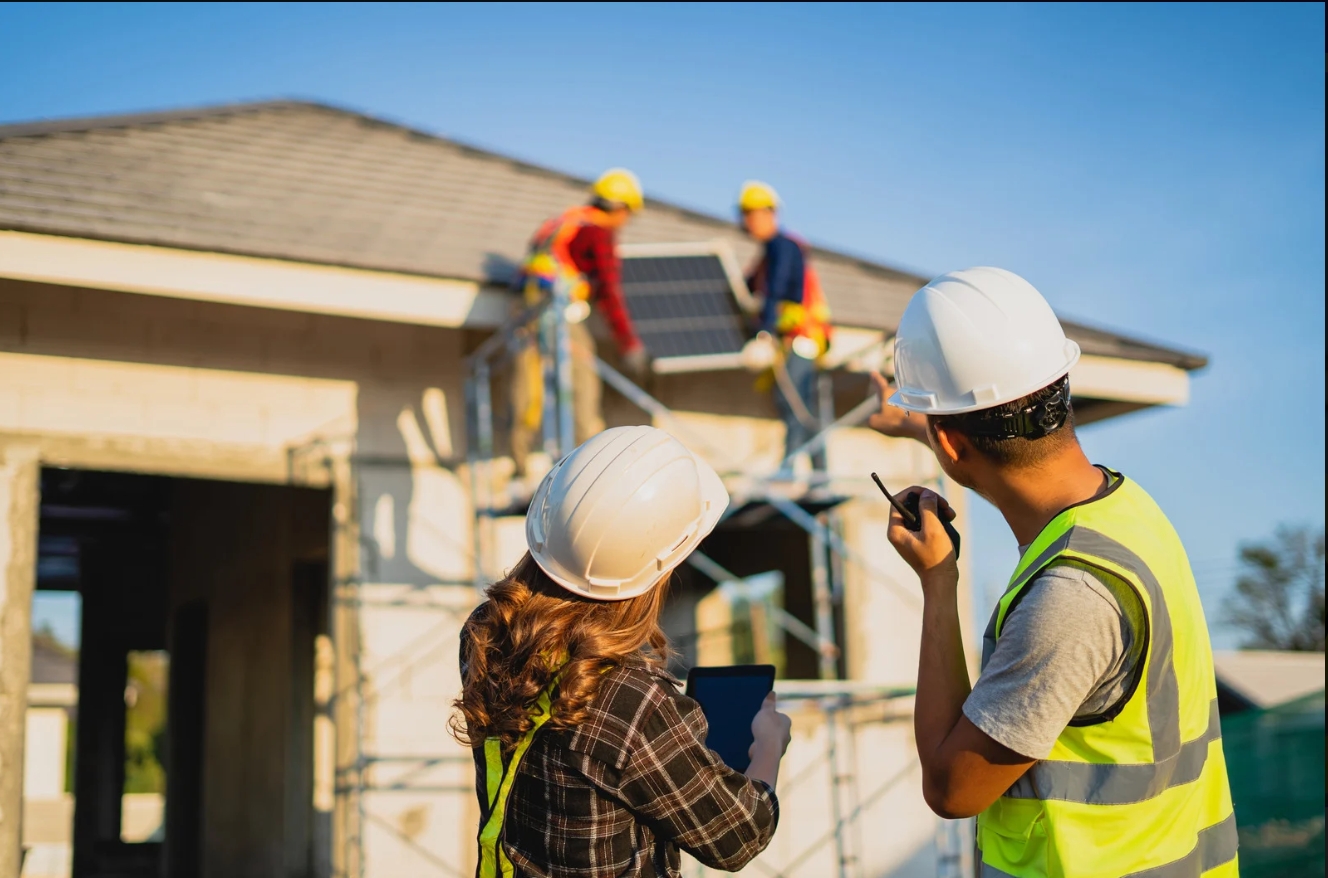
Artificial intelligence isn’t just transforming Silicon Valley — it’s reshaping job sites across the construction industry.
Once viewed as a tool reserved for finance, healthcare, or retail, AI is now solving some of construction’s toughest, most persistent challenges: chronic schedule delays, safety hazards, cost overruns, and an ongoing shortage of skilled labor.
And here in the Pacific Northwest, AI adoption is accelerating fast. Forward-thinking builders are turning to AI to streamline planning, boost field productivity, anticipate risks before they become costly problems, and deliver projects with greater predictability than ever before.
AI for construction companies is not a future concept, but a present advantage.
AI is no longer a future trend — it’s becoming a competitive edge for construction firms ready to build smarter.
Key Takeaways: AI Adoption for Construction & Builders
AI is already transforming job sites with market-ready tools, including computer-vision safety monitoring, AI-powered scheduling, and automated cost-forecasting. These practical innovations are shaping construction technology trends in 2025.
Construction companies are seeing measurable ROI in the PNW, from Salem to Seattle, through reduced safety incidents, fewer delays, and tighter cost control, proving that AI for construction companies is not a future concept, but a present advantage.
AI in construction management strengthens decision-making, as well as automates manual tasks, and identifies risks early, reducing rework and improving margins.
Adoption success hinges on involving your team early. When field crews, project managers, and estimators participate in AI readiness planning, roadmapping activities, and implementation decision-making, they gain ownership and adoption becomes far easier.
Powerful AI Applications for Construction Firms & Builders
Market-ready AI solutions are already delivering value on job sites across the Pacific Northwest. Here’s how.
AI-Powered Project Management & Scheduling
AI-driven construction software analyzes past project data, weather patterns, labor availability, and supply-chain disruptions to predict and prevent delays. In a recent report by RICS, it was found that utilizing the proper AI tools can result in a reduction in project scheduling errors by 25%, helping keep projects on track.
Use case example: A mid-sized GC uses an AI scheduling tool that analyzes weather forecasts and crew availability to automatically shift critical-path tasks, preventing delays before they occur. When a week of heavy rain is predicted, the system instantly reschedules exterior work and reallocates teams to indoor tasks, keeping the project on track.
Construction Site Monitoring & Safety Analytics
Computer-vision systems, job-site cameras, drones, and smart sensors help construction companies:
- Detect safety risks earlier
- Improve PPE compliance
- Track site progress in real time
- Reduce time spent on manual inspections
Use case example: An AI-enabled camera system scans the job site every morning and alerts the superintendent when it detects missing fall protection or workers entering restricted zones. The team receives real-time notifications, allowing safety issues to be corrected immediately rather than after a walk-through or incident.
AI-Enhanced Design & Architecture
Generative AI uses deep learning to analyze data including blueprints, models, and design parameters to produce innovative designs tailored to specific requirements.
During preconstruction, AI tools help:
- Suggest cost-effective or energy-efficient materials
- Predict building performance
- Automate clash detection
- Reduce design-phase rework
These capabilities align with the growing demand for artificial intelligence in construction management and BIM optimization.
Use case example: An architecture firm uses generative design software to compare hundreds of layout options and identify the most cost-effective structural system using less steel and concrete. The tool automatically flags MEP clashes in the BIM model, reducing redesigns and saving weeks of coordination time.
Cost Control & Budget Forecasting
AI tools can automatically analyze real-time spending and compare it to project cost forecasts, flagging issues before they turn into overruns.
This is particularly valuable in an era of financial uncertainty for SMBs where material costs, subcontractor availability, and supply-chain volatility remain unpredictable.
Use case example: A construction company’s AI budgeting tool continuously compares actual spend to projected costs and alerts the project manager when framing materials begin trending over budget. The team identifies the cause—supplier delays increasing price—and switches vendors early enough to avoid a major overrun.
Sustainable Building Practices
AI tools help teams select lower-carbon materials, optimize building orientation, and improve energy performance long before breaking ground. On the job site, AI-powered scheduling, real-time monitoring, and predictive analytics reduce fuel waste, prevent rework, optimize equipment usage, and track material consumption to cut down on scrap and landfill waste. These tools also support environmentally conscious procurement by identifying greener suppliers and minimizing transportation emissions.
Use case example: During preconstruction, an AI tool recommends lower-carbon materials and models energy performance to help the design team reduce the building’s environmental footprint by 20%. On the job site, AI-monitoring systems track fuel usage and material waste, helping crews adjust workflow and reduce emissions throughout construction.
2026 Construction Technology Trends: What’s Coming Next
Artificial intelligence is advancing at an extraordinary pace, and construction firms—especially those in the Pacific Northwest—are beginning to unlock powerful new opportunities to streamline operations, strengthen coordination, and grow more efficiently.
As these capabilities mature, the construction technology trends shaping 2026—from AI-enhanced BIM and real-time site intelligence to predictive equipment management and autonomous machinery—show how AI is changing the construction industry and giving builders new ways to work smarter, reduce risk, and build more sustainably.
AI-Enhanced BIM & Digital Twins
As AI capabilities expand, BIM platforms are evolving into dynamic, real-time digital twins that give construction teams unprecedented visibility into project conditions.
What this means for construction firms:
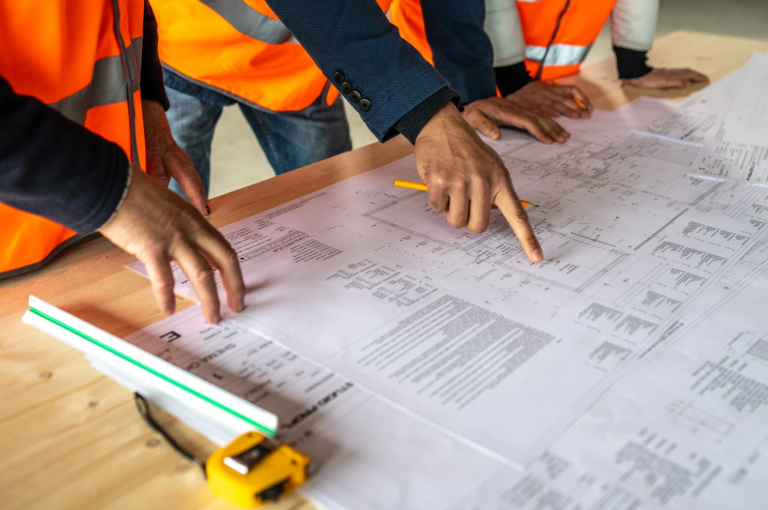
AI-supported construction planning tools are becoming critical competitive advantages in the PNW.
Real-time progress tracking through automated drone scans and sensor data synced directly to BIM
Integrated issue detection that flags design clashes or field deviations before they cause delays
Smarter coordination across trades, driven by shared data models that update as the job site changes
Better project outcomes, as teams can visualize risks and adjust plans proactively
These emerging capabilities align with the rapid market growth outlined in the Digital Twin in Construction Market Forecast Report, which predicts the sector will more than double by 2030.
Predictive Maintenance for Heavy Equipment
AI will analyze engine data, vibration metrics, and wear patterns to predict failures before they happen. This can reduce the buried costs of downtime and disruptions, as well as extend equipment lifespan.
Why this matters:
Reduced downtime from early-warning alerts
Longer equipment lifespan due to optimized maintenance schedules
Better resource planning, especially for multi-site operations
Autonomous & Semi-Autonomous Construction Equipment
While still emerging, autonomous construction equipment is rapidly gaining traction. A number of manufacturers are testing or deploying autonomous dump trucks, compactors, dozers, and earthmoving equipment capable of performing repetitive tasks with high precision.
Emerging use cases include:
Self-driving dump trucks transporting material safely and consistently
Autonomous grading and earthwork with centimeter-level accuracy
Robotic equipment supporting labor-strapped crews by handling repetitive or hazardous tasks
Reports like Autodesk’s State of Design and Make highlight growing adoption of automation and robotics across construction—trends expected to accelerate as equipment becomes more efficient, affordable, and tightly integrated with job-site data systems.
AI-Driven Sustainability
AI can help builders reduce environmental impact by recommending:
- Low-carbon materials
- Energy-efficient design choices
- Waste-reduction strategies
- Optimized logistics planning
This is becoming increasingly important as regulatory pressure increases nationwide.
AI Isn’t the Future of Construction—It’s Here Now
AI is rewriting the rules of construction. Early adopters aren’t just improving safety, schedules, and costs—they’re outpacing competitors and redefining what a modern job site looks like.
With the right strategy and the right partners, AI becomes a power tool… capable of driving the kind of efficiency and predictability the industry has been chasing for decades.
With the right strategy and the right partners, AI becomes a power tool for your entire organization: accessible, immediately valuable, and capable of driving the kind of efficiency and predictability the industry has been chasing for decades.
Why Partner with an MSP for AI Enablement
Modern managed service providers don’t just provide IT and tech support. They’re strategic SMB business enablers.
At OLS, we meet your business where it is today. And we help you build and scale your future through technology.
OLS supports Pacific Northwest construction firms by helping them:
- Identify high-ROI AI opportunities
- Pilot market-ready, proven tools
- Train teams to ensure successful adoption
- Build a secure, compliant AI roadmap
- Strengthen operations through smarter, safer, and more reliable technology
AI Readiness Supports AI Adoption in the Construction Industry
And if your organization doesn’t yet have a clear path for AI adoption, you’re not alone—and you’re not behind. Many construction firms are still defining what AI means for their operations, and OLS Technology is ready to assist you in using AI to propel your business forward.
Whether you’re evaluating your first AI tool or building out a multi-year roadmap, OLS is here to guide you—helping your business work better today and build better tomorrow.
Ready to explore AI for your construction business? Reach out to the team at OLS. Let’s build your future together.
Predictable. Efficient. Safe. IT that’s more than tech—it’s fuel for growth.
OLS Technology helps Pacific Northwest SMBs grow with managed IT and cybersecurity built for the real world. We focus on what matters most to your teams and your bottom line: predictable pricing, reliable tech and uptime, smarter workflows, and secure data and communication.